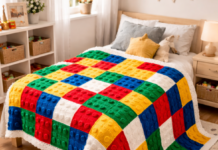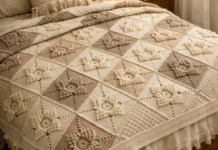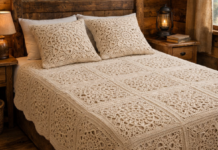




Crochet blankets made with floral motifs are timeless pieces that bring warmth, texture, and artistic beauty to any space.
Among the many crochet styles available today, the mandala hexagon crochet pattern has become especially popular because of its intricate yet relaxing design.
Unlike traditional granny squares, hexagon motifs create a stunning honeycomb layout. As a result, the finished blanket looks more organic and decorative. The layered stitches in this pattern also add depth, giving each motif a delicate mandala or flower-like appearance.
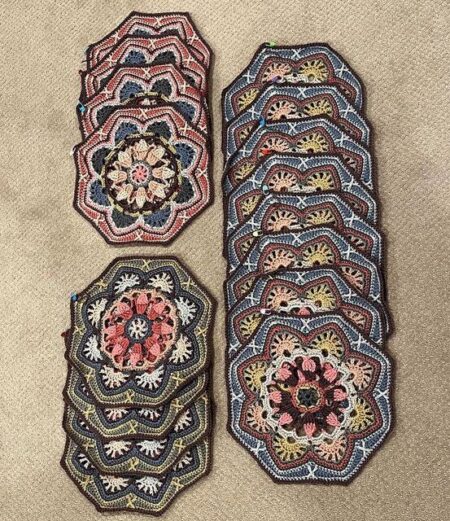
In addition, this type of crochet project is perfect for those who enjoy working with colors. Each round introduces a new opportunity to blend shades, creating a vibrant and unique handmade blanket.
In this tutorial, you will learn how to crochet a beautiful mandala hexagon motif step by step, which can later be joined to create a stunning crochet blanket.
Materials Needed
Before starting your crochet blanket, gather the following supplies.
• Medium weight yarn (cotton or acrylic)
• Crochet hook size 4 mm – 5 mm
• Yarn needle
• Scissors
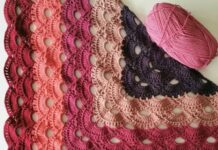
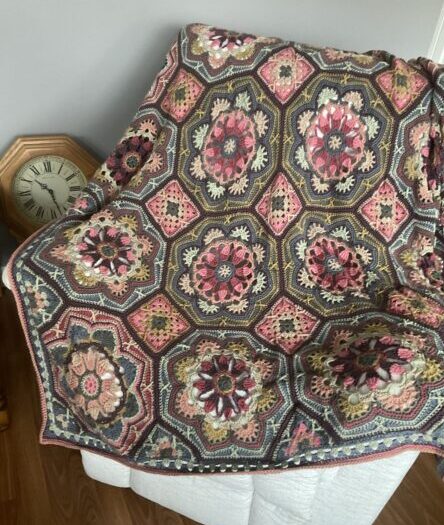
For a beautiful layered effect similar to the example blanket, consider using colors such as:
• Warm coral
• Mustard yellow
• Soft beige
• Dusty rose
• Olive green
• Charcoal gray
These tones create a cozy and elegant palette, although you can easily customize them to match your personal style.
Crochet Abbreviations (US Terms)
To make the instructions easier to follow, here are the abbreviations used in this pattern.
CH – Chain
SL ST – Slip Stitch
SC – Single Crochet
HDC – Half Double Crochet
DC – Double Crochet
TR – Treble Crochet
SP – Space
These stitches are commonly used in many crochet mandala patterns.
Step-by-Step Mandala Hexagon Crochet Pattern
This crochet motif is worked in the round, starting from the center and gradually expanding outward.
Round 1 – Creating the Center Ring
First, begin with a magic ring.
Chain 2 to start the round. Then work 12 double crochets (DC) into the ring.
After finishing the stitches, gently pull the ring closed. Finally, join with a slip stitch.
At this point, the small crochet circle forms the center of the mandala flower.
Round 2 – Building the Flower Base
Next, attach your second yarn color.
Chain 2 and work 2 DC in each stitch around. This increase allows the motif to grow evenly while keeping the center flat.
Once the round is complete, join with a slip stitch.
As a result, the motif will begin to resemble a small flower center.
Round 3 – Creating the Petal Texture
Now it is time to create the decorative petal stitches.
Start by chaining 3. Then work clusters of 3 DC in the spaces between stitches.
Continue making these clusters all the way around the circle. Because the clusters sit slightly raised, they naturally form a petal-like texture.
After finishing the round, join with a slip stitch.
At this stage, the floral design becomes more visible.
Round 4 – Expanding the Mandala
Next, switch to another yarn color to highlight the pattern.
Chain 2 and work 1 DC in each stitch. However, every few stitches you should place 2 DC in the same stitch to gently expand the motif.
These increases help prepare the shape for the hexagon structure.
Round 5 – Forming the Hexagon Shape
This round is where the magic happens.
To create the hexagon structure, work DC stitches along the sides, and at six evenly spaced points make the following corner combination:
2 DC, CH 2, 2 DC in the same space
Because of these corners, the round gradually transforms from a circle into a hexagon.
By the end of this round, the motif will have six defined sides.
Round 6 – Decorative Border Round
For the final round of the motif, add a contrasting color.
Work single crochet stitches around the entire hexagon. When reaching each corner space, crochet:
SC, CH 2, SC
This small detail helps keep the shape clean and symmetrical.
Finally, fasten off and weave in the yarn ends.
Your mandala hexagon crochet motif is now complete.
Joining the Crochet Motifs
Once several hexagons are finished, you can begin joining them together.
Many crocheters prefer using the slip stitch join or the whip stitch method, because both create neat and flexible seams.
As more motifs are added, the blanket gradually forms a beautiful honeycomb layout.
Tips for Crocheting Mandala Blankets
Although this pattern is beginner friendly, a few tips can improve your results.
First, keep your stitch tension consistent. Even tension helps the motifs remain flat and symmetrical.
Additionally, blocking your motifs before joining them can greatly improve the final look of the blanket.
Finally, experimenting with color placement can make your crochet blanket truly unique.
What You Can Make With This Pattern
Even though this motif is perfect for blankets, it can also be used in many other crochet projects.
For example, crocheters often turn these motifs into:
• Crochet throws
• Decorative bed blankets
• Crochet shawls
• Boho pillow covers
• Table runners
• Wall art pieces
Because each motif works up individually, the project becomes easy to carry and crochet anywhere.
Why Crocheters Love Mandala Hexagon Patterns
Mandala-inspired crochet motifs combine texture, color, and geometry in a beautiful way. For this reason, they have become one of the most popular crochet blanket styles in recent years.
Furthermore, the repetitive rounds make the project relaxing once the pattern becomes familiar. Many crocheters even describe working on mandala motifs as a form of creative meditation.
Whether you are creating a cozy blanket for your home or a handmade gift for someone special, this mandala hexagon crochet pattern is a wonderful project to try.